News
Last month, I wrote an open letter reflecting on my son’s hesitation about majoring in international relations. Like many young people, he was wrestling with whether idealism—or jobs—still have a place in a world that seems more fragmented than unified.
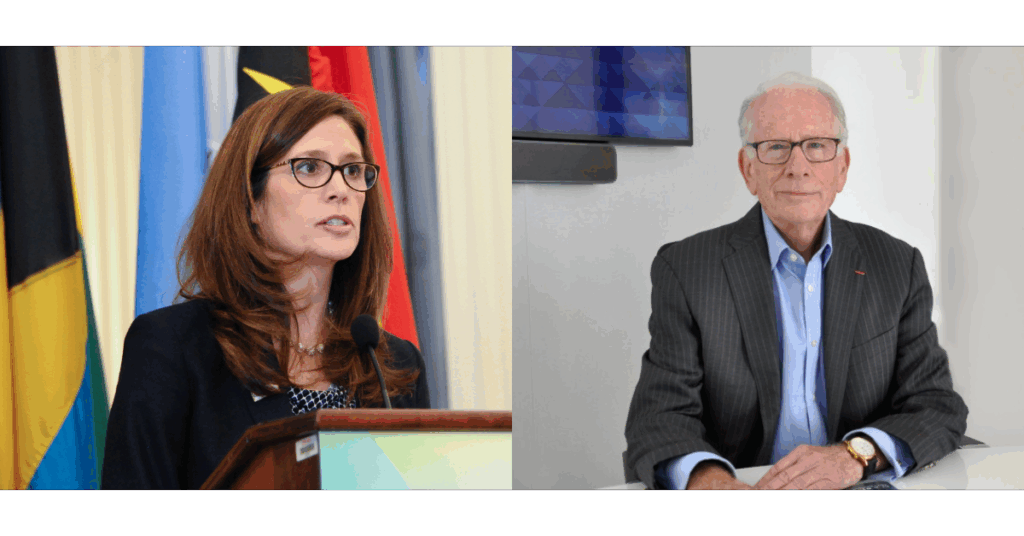
That question—“Does it still make sense to pursue a career in international relations?”—isn’t just personal. It’s one that international education professionals, mentors, and faculty across the country are hearing from students. Many reached out in response to that post to share their own concern. One was Dr. Allan Goodman, President Emeritus of the Institute of International Education and a lifelong champion of global engagement.
Today’s post marks the launch of “Global Calling,” a new blog series from Cultural Vistas. In this space, we’ll be sharing insights and reflections from leaders across the international education and exchange community, highlighting the challenges we face, the values we share, and the people working to build a more connected world.
To kick off the series, Dr. Goodman and I co-authored this first piece focused on how mentors and educators can help students navigate uncertainty and stay committed to global careers.
Our conversation was a timely reminder: the world still needs globally minded professionals—perhaps now more than ever.
A Growing Interest, A Shifting Landscape
Dr. Goodman, as always, brought the data. IIE has been tracking global education trends since 1949 through its Open Doors Report. According to a recent Indeed.com report, “the demand for international relations jobs continues to grow as the world changes.” Over 13,000 students graduate annually in the U.S. with IR degrees, with thousands more in related fields.
But the picture isn’t entirely rosy. As Dr. Goodman noted, “Since the Indeed assessment last spring, we’ve seen widespread reductions at government agencies where IR is practiced, the elimination of functions tied to foreign policy, and the cancellation of the Foreign Service Exam for the rest of the year.” Even so, he cautions against confusing a momentary contraction with long-term irrelevance. “The challenges governments face—climate change, migration, global health, AI—require cross-border collaboration, historical understanding, and cultural fluency,” he explained. “That means jobs for people who understand the international system—and how to fix it when it breaks.”
Global Skills Are Showing Up in New Places
What’s changing is where global careers take root. International engagement is no longer confined to embassies and foreign ministries. It’s emerging in:
- State and local governments, brokering bilateral partnerships
- Sports and entertainment, where global logistics and media rights drive deals
- Tech and AI companies, which need geopolitical and ethical fluency
- Humanitarian fields, where global understanding is core to the mission
Tomorrow’s IR graduates must be multilingual, media-savvy, and multidisciplinary—comfortable in both a diplomatic briefing and a startup pitch. They must understand the world not just through geopolitics, but through supply chains, migration flows, and global innovation.
Mentors: Help Students Zoom Out
Our job as educators and mentors is to help students zoom out from the headlines and see the bigger picture. That means reminding them:
- The world still needs their global voices, skills, and values
- Passion is a starting point—and nearly every field (cars, climate, fashion, finance) has global applications
- Multilateralism may be bruised, but it’s not broken. Institutions like ASEAN, the African Union, WHO, and the World Bank continue to evolve and hire
- Think tanks are places where future models of global engagement will emerge. We need young professionals to engage with them
We also need to help students make strategic choices about their international experiences:
- Use study abroad to build networks, not just collect passport stamps
- Conduct informational interviews while abroad to understand career pathways
- Link their interests to global issues—show them how their passion connects to the world
- Encourage them to keep learning languages—even at a basic level, it signals curiosity and cultural competence
Now is Not the Time to Turn Back
Is this a tough moment? Yes. But we’ve been here before. As Dr. Goodman reminded me, “We’ve seen wars start and end poorly, recessions, hiring freezes, and new global issues emerge we never studied. Yet in every cycle, there’s been room—and need—for the next generation.”
For students considering graduate school, this could be the time to invest. By the time today’s juniors and seniors complete their programs, the policy and hiring landscape will likely look very different—and global skills will be more in demand than ever.
The Road Still Leads Somewhere
Yes, the future feels uncertain. But the path is still worth taking. And if you’re reading this as someone who has dedicated their career to international engagement—whether as an educator, advisor, advocate, or parent—remember:
Our job isn’t just to teach about the world.
It’s to help the next generation find their place in it.”