News
When we think about global exchange, we often picture young people at the beginning of their careers, open to new experiences, still forming their perspectives, and full of possibility. That kind of exchange is essential. Early-career experiences can shape worldviews for a lifetime.
Most global exchange systems, funding models, and narratives are still oriented toward students and early-career participants. That doesn’t mean mid-career exchange is absent, but it is less visible, less studied, and therefore less prioritized. The result is a gap between where investment is concentrated and where immediate, applied impact can occur.
I was recently reminded that some of the greatest impact may come from people who already have decades of experience, deep professional credibility, and a clear sense of what needs to change.
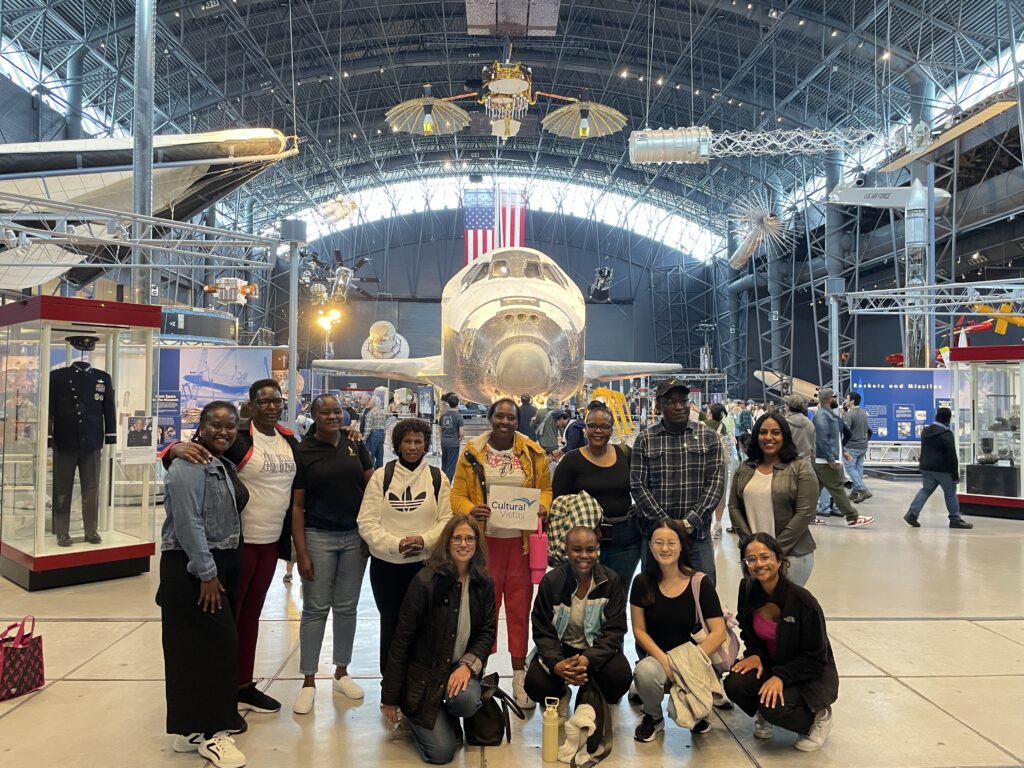
Last weekend, I had the pleasure of meeting with a group of J-1 teachers working in special education in Northern Virginia. They come from Kenya and Zimbabwe, and what stood out was not only their professional skill, but the stage of life and career they represent. The average age of the group is around 48. They are not just beginning to imagine their impact; they are already living it.
One teacher reflected,
I never thought I would have the opportunity to do what I am doing now. I assumed I would just pay the fees so my children could have this kind of experience.”
That comment stayed with me. It captured something important about how we often frame exchange as an opportunity for the next generation, when in reality, experienced professionals may be among those best positioned to translate learning into immediate action.
These educators are not simply observing classrooms. They are interpreting what they see through years of teaching, leadership, family responsibility, and experience navigating under-resourced systems. Several spoke about wanting to pursue master’s degrees in special education while in the United States, so they can better support students with autism and other learning differences. They also spoke candidly about the realities in their home countries, where children with special needs are too often misunderstood, excluded, or underserved.
For them, the learning is not abstract. It is practical, urgent, and tied to a larger purpose.
As one teacher shared,
When I go back, I want to start a school in Zimbabwe based on what I have learned here.”
The benefit also flows in both directions. In Northern Virginia, these teachers are contributing as experienced professionals in classrooms that require patience, adaptability, and deep human understanding. They bring global perspectives and problem-solving approaches shaped by very different environments. In special education, where each child’s needs are unique, that diversity of experience strengthens the learning environment for everyone.
At Cultural Vistas, we see professional exchange as valuable across the full career spectrum, with a distinct opportunity to engage experienced leaders more intentionally.
Participants at this stage engage differently. They bring context, credibility, and urgency. They are not only learning; they are applying, adapting, mentoring, and preparing to implement what they gain.
Through programs such as the J-1 Exchange Visitor Program, the Citizen Ambassador Program, the International Visitor Leadership Program, and the Edmund S. Muskie Professional Fellowship Program, we create opportunities for professionals in fields such as education, STEM, law, and public service to deepen leadership capabilities and accelerate innovation across borders.
If we are serious about addressing global challenges, we need to think more broadly about who participates in exchange, and when. What I saw in Northern Virginia was a group of professionals already translating experience into action. The opportunity ahead is to engage more mid- and senior-career professionals across sectors such as healthcare, workforce development, education, and public service. If global exchange is about expanding what is possible across borders, then we should invest not only in emerging leaders but also in experienced professionals who are ready to create change now.
When we do, we strengthen the full continuum of leadership and create the conditions for systems to evolve faster, more practically, and from within.