News

We are living in a moment shaped by conflict. This moment feels sudden and even jarring. But the reality is, it’s been simmering for years. Conflicts that lead to war often emerge over time through widening gaps in diplomacy, in economic engagement, and in the human connections that help countries understand one another.
War, in many ways, is what happens when those connections break down.
My first experience and understanding of war came through my father, a Vietnam veteran. I was born just one year after he returned, having been drafted as a young father and law student. Throughout my childhood, I saw the long shadow of that war. I lost several family members to the effects of Agent Orange. I witnessed close friends of my father passing far too early, and I watched him move through a quiet process of reflection and reconciliation that he largely carried on his own. I also watched my grandfather suffer, both mentally and physically, from the lasting effects of his service in World War II.
Those experiences never fully recede. They live just beneath the surface and in moments like this, they return with a particular clarity. It is in that context that I find myself reflecting not only on the present moment, but also on the role we have to play at Cultural Vistas.
This week, the U.S.–ASEAN Business Council Institute announced a renewed partnership with Cultural Vistas to implement the Shared Service, Shared Healing program—also known as Bridges to Memories, an initiative that brings American and Vietnamese veterans together in dialogue and carries their experiences forward through storytelling and education. We are grateful to the U.S.–ASEAN Business Council for their vision and leadership and are honored to be working together on this effort.
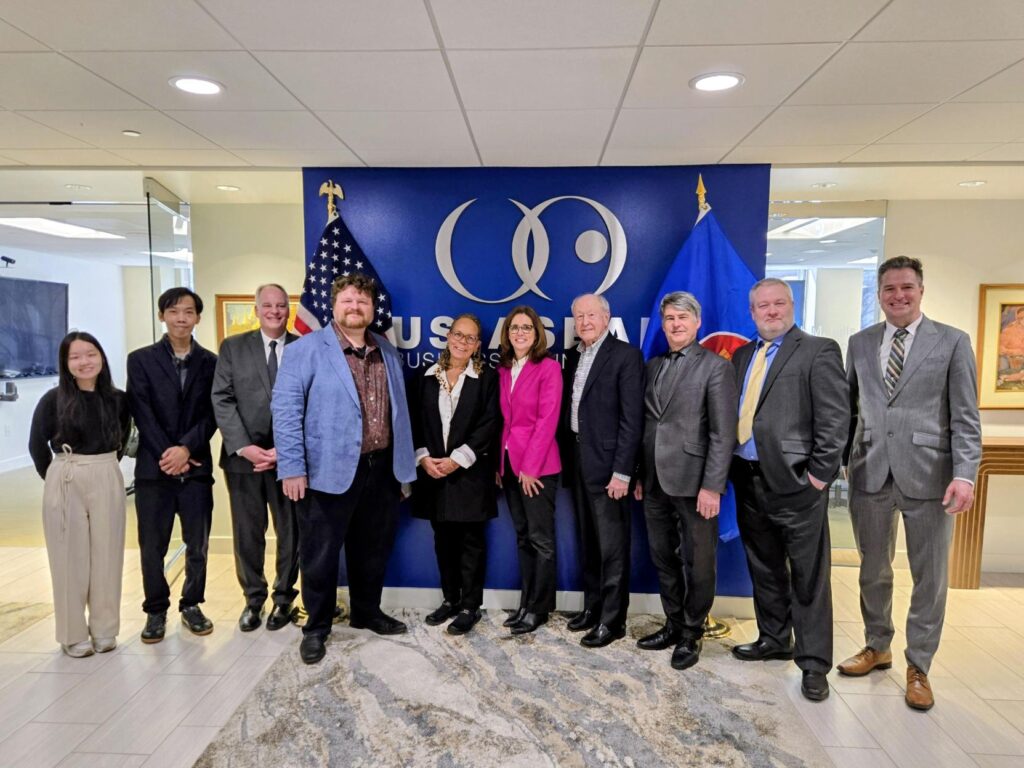
Fifty years ago, the United States and Vietnam were defined by conflict. Today, these nations are partners- economically, diplomatically, and increasingly across education, business, and civil society. The U.S.–Vietnam relationship is now one of the fastest-growing and most strategically important economic partnerships in the world.
That transformation did not happen by accident. It was built over time through sustained engagement and efforts that reconnected people, rebuilt trust, and created space for cooperation across sectors. Veterans, policymakers, business leaders, educators, and young people have all played a role. The trajectory from conflict to cooperation is long. But it is possible.
Many of today’s challenges require people to work across cultures, sectors, and perspectives. Yet the abilities that make this collaboration effective, including curiosity, adaptability, and the willingness to engage constructively across differences, are often assumed rather than intentionally developed. Experiences that bring people together across national and historical divides help strengthen these human capabilities and create the conditions for cooperation to take hold.
The Shared Service, Shared Healing program is one way to carry those lessons forward. By bringing veterans from both countries into dialogue and sharing their experiences with students and young professionals, we are helping connect lived experience to future understanding. What matters is not only that these stories are preserved, but that they are shared across perspectives and made meaningful for the next generation.
Because for many young people, war is something encountered at a distance through headlines or simplified narratives. What is harder to grasp is the full trajectory: how conflicts begin, how they unfold, and what it takes to move beyond them.
Understanding that trajectory matters. If conflict can emerge from a breakdown in engagement, then peace and cooperation must be built through its restoration.
The U.S.–ASEAN relationship sits at the center of this moment.
As the region grows in economic and strategic importance, the strength of that partnership will depend not only on policy alignment, but on continued investment in relationships across governments, businesses, educational institutions, civil society, and very importantly, across generations.
At Cultural Vistas, we are committed to deepening our engagement across the U.S.–ASEAN region. For more than 60 years, our work has focused on building the human connections that underpin strong international partnerships. Today, we are continuing to invest in programs, partnerships, and exchanges that strengthen those connections because we believe they are still essential to long-term cooperation and stability.
Programs like this bring that commitment to life, linking past experience to present understanding, and present understanding to future cooperation. The Vietnam War is not only a chapter of history. It is also a case study in what it takes to move beyond conflict. And in a time when the world is once again confronting division and instability, the real question is whether we will choose to carry those lessons forward through continued engagement, deeper understanding, and the deliberate work of building connection before the gaps widen again.