Stories
Syrene A. Fesariton is a middle school science teacher at the STEAM Academy of Warrensville Heights, part of the ACCEL Schools network. She began her teaching career in 2011 in the Philippines, where she is originally from, and is now completing her fourth year in the J‑1 Teach Program. As she prepares to enter her fifth and final year, Syrene reflects on her journey as an international educator in the United States and the personal and professional significance this experience has held for her.
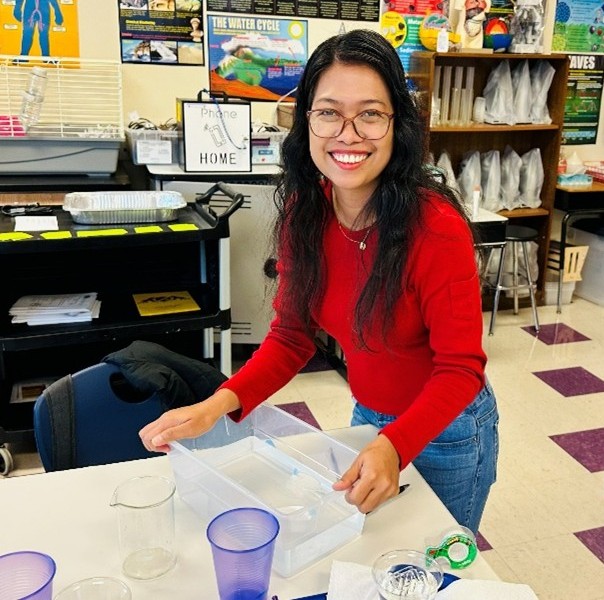
My motivation to explore the US education system comes from my passion for teaching science and my desire to become a more effective and innovative educator. I have always believed that science is best learned through curiosity, observation, exploration, and real-world connections. Having different educational backgrounds, I want to observe how the US classroom facilitates inquiry-based learning, hands-on experiments, and the incorporation of technology in a way that makes science more engaging and meaningful for my students.
The most valuable aspect of this journey has been witnessing students’ responses when given the chance to think like young scientists. In my classroom, I have been able to guide them through experiments, ask questions that ignite their curiosity, and encourage them to observe, investigate, and explain their ideas. It has been very fulfilling to witness their enthusiasm as they share and explain new concepts, whether it is all about comprehending light, sound, forces and motion, ecosystems, phases of the moon, exploring the solar system, or any science topics.
The growth that I witness in my students and myself is the true meaning of this experience for me. I have learned to be more flexible, creative, and student-centered in my teaching. Building a supportive and inclusive environment where every student feels confident to participate and explore science has strengthened my purpose as an educator. Through this journey, I am motivated to make science enjoyable and relevant for all learners.
Teaching lessons on the solar system for my 5th-grade and plant and animal cells for my 6th-grade is something I am proud of in my science class. I wanted my students to truly understand these concepts, so I provided hands-on activities, interactive learning, and lots of worksheets that allowed them to explore and learn in more meaningful ways.
To study the solar system, I instructed my 5th-grade students to construct their own models and exhibit each planet in the solar system. I still remember how excited they were as they shared facts and explained their ideas in their own words. It was rewarding seeing them not only memorize information but also understand and enjoy what they were learning. For my 6th-grade class, during our lesson on plant and animal cells, my students created cell models using different colors of clay. They labeled each part and explained its function, which helped them visualize how cells work. What made me especially proud was hearing them confidently explain the differences between plant and animal cells and relate them to real-life situations.
This experience meant a lot to me because I saw my students become more engaged and confident. They asked thoughtful questions and were able to explain science concepts in their own words.
It reminded me that when students are given the opportunity to explore and be creative, learning becomes more meaningful. Moments like this inspire and motivate me to continue creating and engaging in student-centered science lessons.”
For me, it’s important to nurture curiosity and a sense of belonging, where every child feels empowered to learn and thrive in my science class. I make it a priority to get to know my students, their interests, and learning needs so that I can connect science ideas to their everyday experiences.
Science is about exploration, and what I do is create a space where students feel safe to ask questions, share ideas, and even make mistakes. I emphasize that errors are part of the scientific process, helping students build resilience and a growth mindset.”
I also use hands-on experiments, investigations, and interactive activities to make learning meaningful. By incorporating visual models, group work, and technology, I make sure that all learners can access complex scientific concepts in ways that will accommodate their strengths and improve their weaknesses.
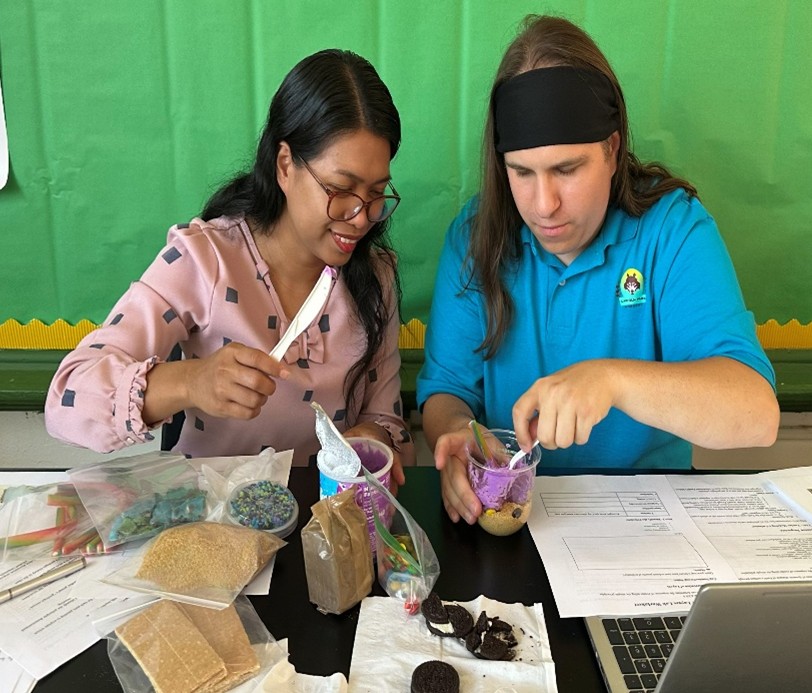
Additionally, I highlight real-world connections in science, encouraging students to think critically and apply what they learn in their lives and the environment around them.
Ultimately, my goal is to nurture not just understanding, but a lasting curiosity and confidence in exploring the world through science.”
As an educator coming from the Philippines, I carry the value of “Bayanihan,” or working together as a community. I reflect this in my science class by encouraging collaboration during hands-on and small-group activities, where students support one another and learn as a team. I also value respect and strong relationships, which were deeply rooted in how I was raised.
I make it a priority to create a warm and welcoming environment where my students feel comfortable asking questions, sharing ideas, and making mistakes. In science, this is important because I want them to feel confident exploring and thinking like young scientists without fear, but also with precautions.”
With my co-teachers, I bring a spirit of cooperation, openness, and positivity. I enjoy sharing ideas and learning from others, just as I value collaboration in my own culture. Overall, I strive to create a classroom where students feel cared for, respected, and inspired to learn not just science, but also the importance of community and understanding others.
Moving to a new country to teach is both exciting and challenging. I am truly grateful for the support and guidance I have received from my school community, colleagues, principal, and director of academics. Their encouragement, advice, and willingness to share ideas helped me feel welcomed and confident in managing my classroom and navigating a new education system.
My growth as a teacher and as a person has been profoundly shaped by this experience. Professionally, I have learned to be more creative and flexible in my science lessons. I now practice inquiry-based activities and perform hands-on activities that engage my students to think like scientists. Collaborating with my colleagues has also helped me improve my teaching strategies and inspired me to explore new ways of making science relatable and exciting for my students.
On a personal level, living and teaching in a different country has taught me independence, resilience, and adaptability. I have learned to communicate more effectively and appreciate cultural diversity. These experiences have not only strengthened my skills as an educator but also shaped me into a more confident individual. I am deeply thankful for the support that has guided and aided my growth as a person and as an educator throughout this journey.
I am excited to bring back many lessons and values from my experience as an international teacher and apply them to my home country. One of the most important and meaningful things I have learned is the value of inquiry-based and student-centered learning. Seeing my students explore science through hands-on activities, questions, and their own discoveries showed me how their curiosity and confidence grow. I want to create a classroom where my students feel empowered to observe, investigate, experiment, and think critically.
Collaboration in small groups is another value I hope to bring home.
I have witnessed how students and teachers thrive when there is mutual respect, support, and teamwork.”
I want to build a classroom community where my students help one another, share ideas, and feel safe to make mistakes as part of the learning process. I am also inspired to integrate creative, technology-driven approaches into science teaching. Using interactive tools, real-world examples, and problem-solving activities made lessons more engaging and meaningful, and I believe these strategies will help my science lessons succeed.